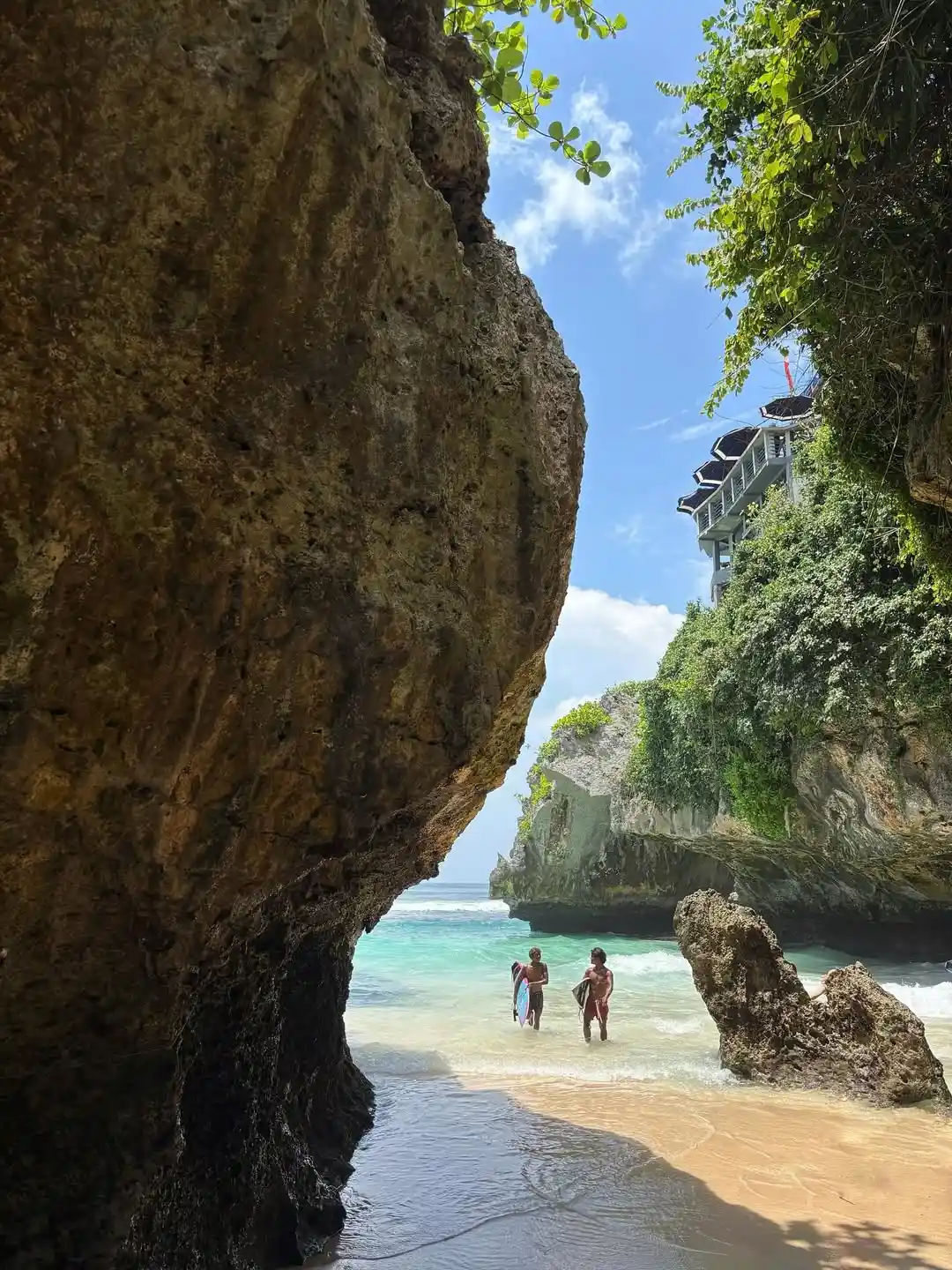
Suluban Beach
19 min from Uluwatu Temple
This surf beach works well before or after the temple because it sits close by on the same cliffside route. It adds a different setting to the visit without pulling you far from Uluwatu.

Dozens of Balinese villages perform the cak chant, yet one clifftop stage draws an audience every single evening. This where to see kecak dance in bali guide explains what separates the Uluwatu amphitheatre from the banjar halls of Ubud and Batubulan. It sets out where the Ramayana is danced, on what schedule, and what the venue asks of the people who come to watch.
Quick answer
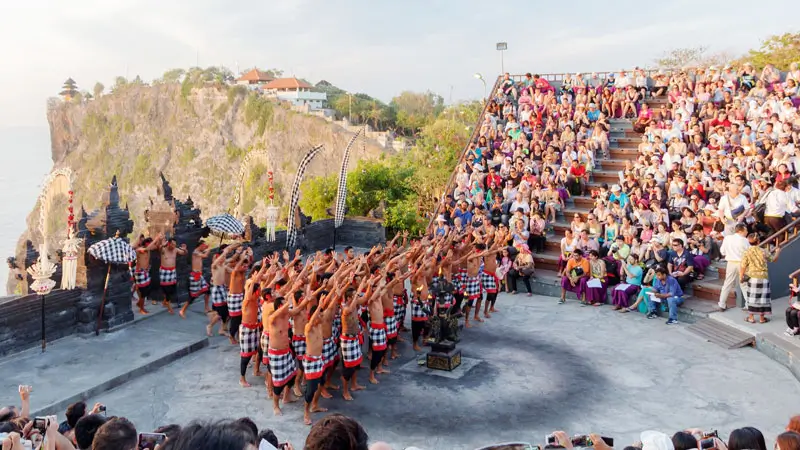
The best-known place is the clifftop amphitheatre at Uluwatu Temple in Pecatu, where the Kecak performance begins at 18:00 daily above the Indian Ocean. Temple gates open 07:00–19:00, and the 60,000 IDR main-gate fee is separate from the dance ticket. Other venues across the island stage Kecak, but none pair it with an open sea horizon.
Kecak is performed without a single instrument. The orchestra is the chorus: rows of men, bare-chested and check-clothed, chanting an interlocking "cak" that stands in for gamelan. The pattern comes from sanghyang, a trance ritual, and was arranged into a Ramayana drama during the 1930s by the dancer Wayan Limbak and the German painter Walter Spies. Travellers researching where to see kecak dance in bali are usually asking about one address in particular, though the repertoire itself belongs to the whole island. That address is Pura Luhur Uluwatu, a sea temple on the limestone edge of the Bukit Peninsula, one of the six sad kahyangan sanctuaries that Balinese Hindus regard as the island's spiritual pillars. The performance does not happen inside the temple courtyard. It occupies a purpose-built stone amphitheatre set into the cliff, tiered like a small Greek theatre, with the Indian Ocean filling the gap behind the fire bowl. Hanuman's arrival, the burning of Lanka, the troupe of macaques that patrol the surrounding forest — the setting does much of the storytelling. The show is ticketed separately from temple entry. Uluwatu is not the only option. Tari kecak is staged nightly in Ubud at Pura Dalem Taman Kaja, in the tour halls of Batubulan, and at Garuda Wisnu Kencana Cultural Park, where the choreography is often larger and the acoustics enclosed. Those venues are useful in wet weather and easier to reach from Sanur or Denpasar. What they cannot supply is the horizon. A Bali landmarks itinerary that treats the clifftop show as one item among many usually underestimates how much the site contributes. The practical decision, then, is venue before date. An Uluwatu Temple kecak fire dance tour commits a whole evening to the southern tip of the island rather than the highlands around Ubud, and works best paired with dinner in Jimbaran afterwards. The programme follows a fixed narrative, so latecomers miss the exposition rather than the finale. Anyone weighing where to see kecak dance in bali against a quieter village staging should read this page's sections on timing, access and temple etiquette, then use the booking pages to secure a seat.
“The chorus is the orchestra: no gamelan, no drums, only interlocking voices and a fire bowl on a cliff edge.”
Uluwatu Temple is open to visitors daily from 07:00 to 19:00. While the temple grounds are accessible all day, the Kecak dance is a separately ticketed event with its own scheduled performance window.
The temple is closed to visitors during the Balinese Day of Silence (Nyepi) and operates on a shortened schedule on Nyepi Eve.
Access to Pura Luhur Uluwatu requires a main gate admission ticket purchased at the official ticket window. The entry fee is determined by nationality and age, granting access to the outer temple areas and scenic cliffside walkways but excluding the separate evening performance.
Verdict: A typical international adult pays 60,000 IDR for base temple entry, with the total expense changing when adding the separately priced cultural dance ticket.
Uluwatu Temple sits on Jalan Raya Uluwatu Pecatu in South Kuta, Badung, Bali. For the easiest approach, follow the main road into Pecatu and use the temple’s main gate, since the site is accessed on foot after you enter the complex.
Drive to Jalan Raya Uluwatu Pecatu, Kuta Selatan, Badung, Bali 80361, Indonesia, then continue to the main temple gate
Ask for Uluwatu Temple, Jalan Raya Uluwatu Pecatu, Kuta Selatan, Badung, Bali 80361, Indonesia, and be dropped at the main gate
Enter through the main gate on Jalan Raya Uluwatu Pecatu and follow the access path into the temple complex
Plan to reach the main gate before the sunset show window starts filling, so you have time to enter, park, and walk in without rushing. Parking is handled outside the complex, so arriving a bit early helps avoid delays at the entrance.
The best window to watch the Kecak dance is between 16:00 and 17:00 during the dry season, which ensures you secure a ticket and a seat before the 18:00 performance begins.
Clear skies, 24°C–31°C
Ideal for open-air seating under clear skies. Arrive early to secure western-facing seats for the 18:00 sunset view.
Frequent rain, 25°C–32°C
Shows still run but rain covers or alternate spaces are used. Note that the site closes entirely for Nyepi in March.
—
Arriving by 16:00 remains necessary to purchase tickets and get a seat. The amphitheater fills quickly even on weekdays.
—
Expect heavy traffic on the road to Pecatu and longer ticket lines. Aim for a 15:30 arrival to avoid missing the start.
Verdict: For the clearest sunset view and manageable queues, visit on a Tuesday or Wednesday between May and September, arriving strictly between 16:00 and 17:00.
Pura Luhur Uluwatu is an active Balinese Hindu temple, not a performance venue, and the Kecak amphitheatre sits inside its grounds. Conduct that reads as casual elsewhere — loud talking, climbing walls, ignoring the sarong rule — is treated as disrespect here.
Uluwatu Temple fits naturally with a half-day loop on Bali’s Bukit Peninsula. Pair the Kecak performance with nearby beach stops and one larger cultural landmark so your route stays efficient between daytime sightseeing and the evening show.
19 min from Uluwatu Temple
This surf beach works well before or after the temple because it sits close by on the same cliffside route. It adds a different setting to the visit without pulling you far from Uluwatu.
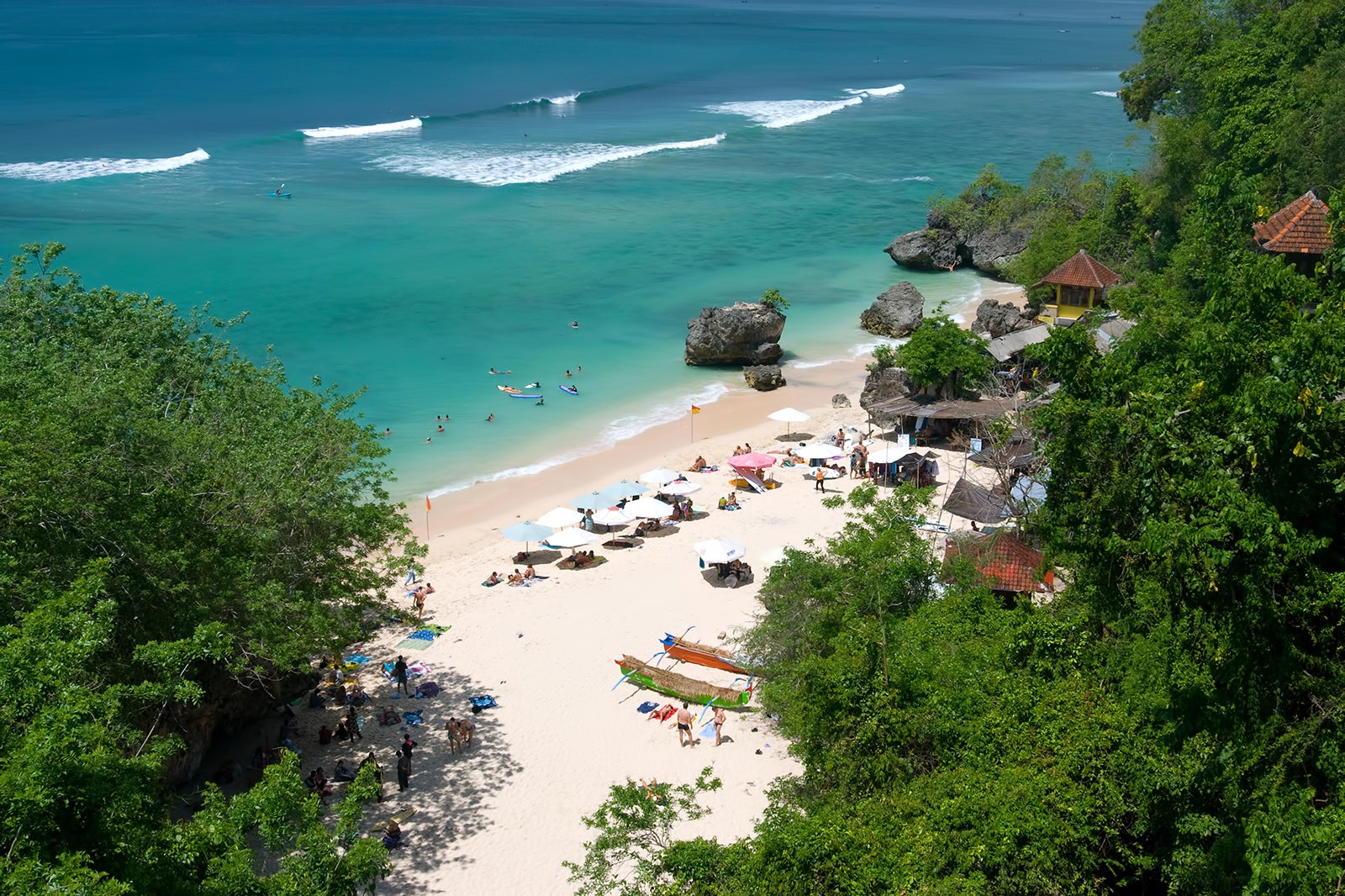
4 min by taxi from Uluwatu Temple
A short transfer makes this an easy add-on if you want one more beach stop on the same day. It pairs well with Uluwatu because the visit is brief and still leaves room to return for the dance.
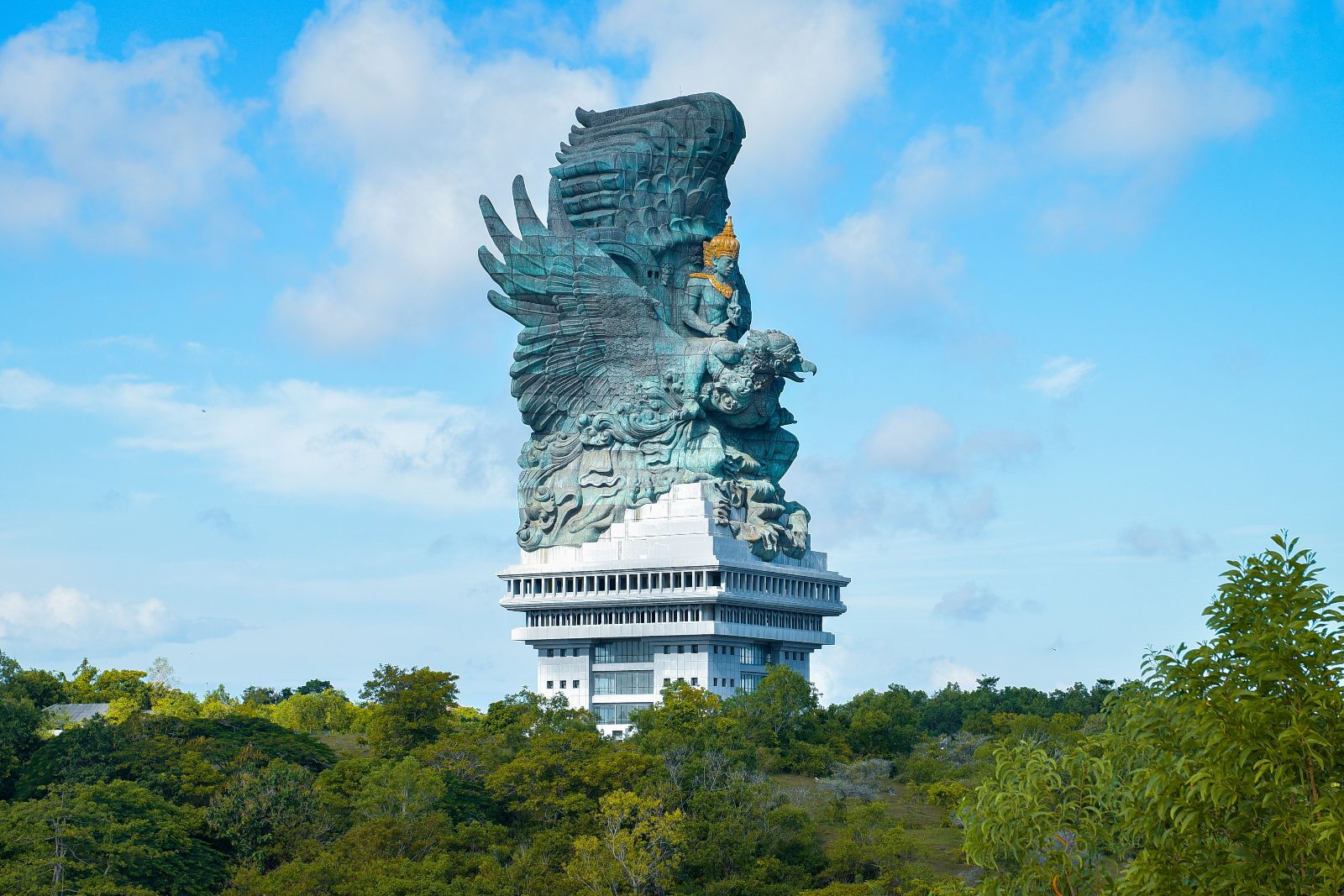
14 min by taxi from Uluwatu Temple
GWK adds a larger cultural landmark to balance the temple-and-beach itinerary. It is best combined on the same transport loop if you are exploring the Bukit Peninsula before heading back for sunset.
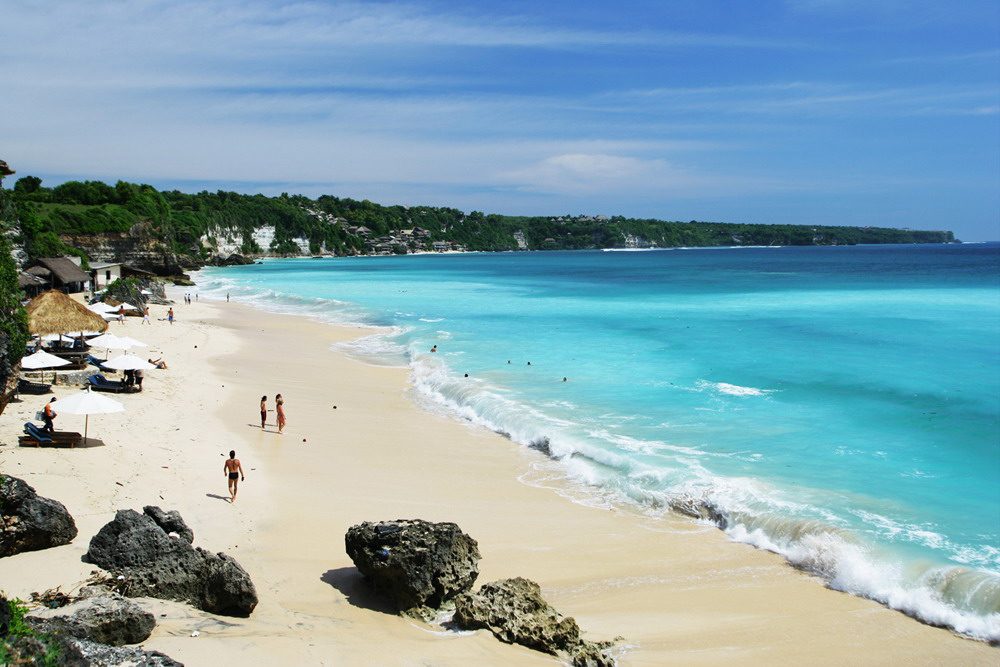
about 20 min from Uluwatu Temple
Dreamland gives you another nearby beach option if you want a longer coastal stop earlier in the day. It pairs best when you are planning a car-based route across southern Bukit, not a quick walking visit.
A short run of preparation items, ordered from the weeks before your trip down to the hour you arrive at the clifftop.
Everything you need to know about where to see kecak dance in bali
Uluwatu Temple is widely considered the premier cliffside amphitheater to watch this traditional fire performance. The dramatic setting on the southwestern coast of the island features a sunset background that complements the retelling of the Ramayana epic.
The main gate entry fee is 60,000 IDR per person, which does not include the separate ticket for the cultural show. You will need to purchase a ticket specifically for the performance at the venue or book it online before arriving.
You can hire a private driver or join an organized group to reach the venue. The site is located in Pecatu on the southern tip of the peninsula, and traffic can become dense in the late afternoon.
The best arrival window is between 16:00 and 17:00 to purchase tickets and secure good seats before the show begins. The performance starts at 18:00, coinciding with the sunset over the Indian Ocean.
Yes, children generally enjoy the rhythmic chanting and dynamic fire performance elements. However, the loud chorus and dramatic characters from the Ramayana epic might startle very young kids.
The performance at the open-air cliffside amphitheater is subject to weather conditions. If heavy rain occurs, the organizers may delay the show or relocate it to a sheltered area on the grounds.
Visitors must navigate approximately 70 steps to access the seating area from the entrance. The paved pathway along the cliff also requires some walking, so comfortable shoes are recommended.